

To examine the influence that the new materials we may have on the Smart structures in the aerospace design, it is necessary to understand the technologies that converge in this emerging materials concept.
If we go back in history, the development of aeronautical construction technology has been supported by three types of materials, those of biological origin (mainly wood), metals (with special attention to aluminum and steel) and composite materials.
For the purpose of this article, we will focus on the last one. A composite material is a material that gets its properties from an intimate mixture of other materials. For example, joining fibers (or fibrous materials) with a resin matrix that bonds them together. The earliest airplanes in history were built with a wood and metal structure with a covering of fabric, which was stiffened with resins until the necessary stiffness was obtained to support aerodynamic forces.
The main benefit of these composite materials is that they enable us to orient their fibers and therefore their strength and mechanical properties in the direction we need them to go. This efficiency in using its best properties of the material in the direction in which we need it, is what makes these materials so efficient in the relation weight/strength. This concept, which started by mixing fibers (such as linen) with vegetable resins, eventually evolved to include the wood in this same concept.
We are effectively talking about the plywood resulting from gluing sheets of wood in different directions that allows us to generate a stronger material than the original. Aircraft such as the De Haviland Mosquito, or the enormous Spruce Goose by Howar Hughes, are proof of its advantages.
The next steps, taking advantage of these concepts, lead us to try to understand meta- materials, lattice materials to finally approach the smart materials for smart structures in the aerospace design. Let’s go step by step, however:
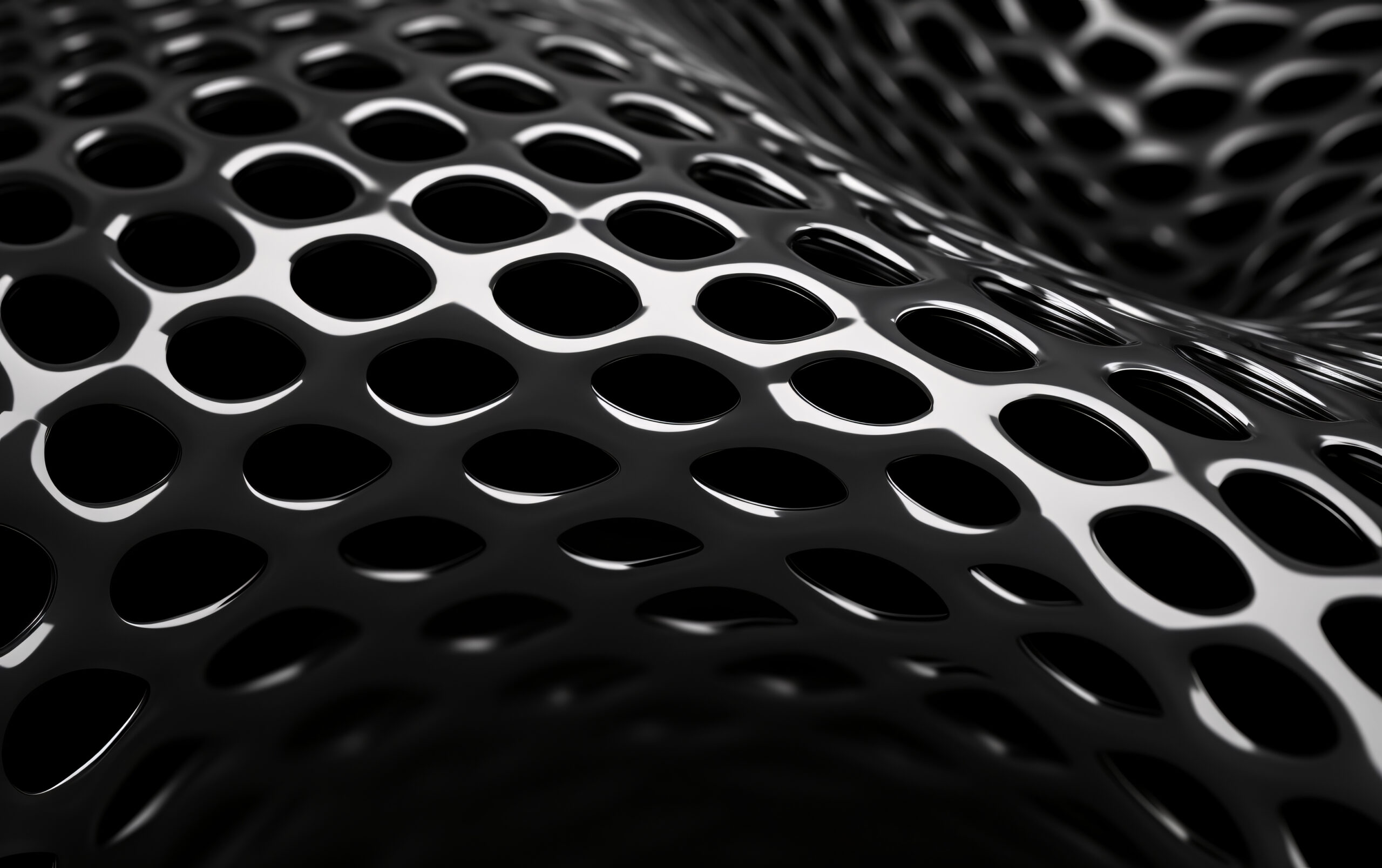
Meta-materials are engineered materials designed to have properties not found in naturally occurring materials. They achieve their unique characteristics through their structure rather than their composition. Meta-materials can manipulate electromagnetic waves, sound waves, and mechanical stress in ways that were previously unattainable.
Usually, those materials are composed of periodic or non-periodic structures at the nano or micro scale. Apart from the benefits in mechanical characteristics, these structures interact with waves (electromagnetic, acoustic, etc.) in unconventional ways, resulting in phenomena such as negative refractive index, electromagnetic cloaking, and superlensing.
Let us have a look of those benefits:
Meta-materials are not only valued for their unique electromagnetic properties but also for their potential to significantly enhance mechanical properties such as strength, stiffness, and resilience. In aerospace applications, where materials must withstand extreme conditions while maintaining lightweight characteristics, meta-materials present a promising solution.
As we have seen in composite materials, meta-materials can be engineered to have mechanical properties that are superior to those of conventional materials. By carefully designing the internal architecture at the micro or nano scale, meta- materials can achieve high strength-to-weight ratios, exceptional toughness, and tailored deformation characteristics. This is achieved through the arrangement of the material’s internal structures, such as lattice frameworks or cellular configurations, which can be optimized for specific mechanical responses. Applications in Smart structures in the aerospace design may include the following:
Lightweight structures: In aerospace design, reducing the weight of components is crucial for improving fuel efficiency and performance. Meta-materials can be designed to create ultra-lightweight structures that do not compromise on strength or stiffness. For example, lattice structures made from meta-materials can provide a high degree of strength while using less material, leading to significant weight reductions. These structures can be applied to various aircraft components, such as fuselage panels, wing ribs, and interior fittings.
We can consider that the meta-materials focused on improving the Smart structures in aerospace design properties, produce
• Weight Reduction: By optimizing the structure at a microscopic level, meta-materials can achieve similar or better mechanical properties than conventional materials with significantly less mass, leading to fuel savings and improved aircraft efficiency.
Increased Durability: The ability to engineer materials that can absorb impacts and resist environmental stresses without permanent deformation or damage enhances the durability and reliability of aerospace components.
Design Flexibility: Meta-materials allow for the creation of components with customized mechanical properties tailored to specific needs, enabling innovative design solutions that were previously not possible.
While the potential of meta-materials to improve mechanical properties is vast, there are still challenges that must be addressed. The fabrication of complex structures at the micro or nano scale can be costly and time-consuming, and ensuring consistency and reliability in large-scale production remains a hurdle.
Additionally, integrating meta-materials with traditional materials and existing manufacturing processes requires further development and testing.

Future research is likely to focus on overcoming these challenges through advanced manufacturing techniques such as additive manufacturing, exploring new meta-material designs, and developing hybrid materials that combine the best properties of meta-materials with those of conventional materials.
As these advancements continue, the use of meta-materials to enhance mechanical properties in aerospace applications will likely expand, contributing to the development of safer, more efficient, and more innovative aircraft designs.
Meta-materials offer significant potential to revolutionize aerospace design through enhanced mechanical properties. By providing lightweight yet strong structures, improved impact resistance, and tailored flexibility, these materials can contribute to safer, more efficient, and longer-lasting aircraft.
Continued research and development will be key to unlocking the full potential of meta- materials in aerospace applications, addressing current challenges, and paving the way for future innovations.
In addition to structural improvements, these materials provide electromagnetic capabilities that must be taken into account.
One of the most famous properties of meta- materials is their ability to exhibit a negative refractive index. This means that when light passes through a meta-material, it bends in the opposite direction compared to its behavior in natural materials. This property can be used to create superlenses that surpass the diffraction limit of conventional lenses, potentially revolutionizing imaging technologies.
Meta-materials can also achieve electromagnetic cloaking, rendering objects invisible to certain wavelengths of light. This is accomplished by bending electromagnetic waves around an object, preventing the waves from being scattered or absorbed. While still largely experimental, this technology has potential applications in stealth technology and non- invasive medical imaging.
Superlensing allows for imaging at a resolution beyond the diffraction limit of conventional lenses. Meta-materials with a negative refractive index can focus light more tightly than natural materials, enabling extremely detailed imaging at the nano scale. This has significant implications for microscopy and nanotechnology.
As we have already seen, meta-materials can manipulate electromagnetic waves, sound waves, and mechanical stress in novel ways. In aerospace, they are used to enhance radar stealth, improve structural integrity, and reduce weight.
From this point on, it is useful to review the possible applications that open up with this type of material:
Structural Integrity: Meta-materials can enhance the mechanical properties of aerospace components . For example, their unique structural properties can be used to create lightweight, high-strength materials that improve the overall performance and fuel efficiency of aircraft.
Radar Stealth: Meta-materials can be designed to reduce the radar cross- section of aircraft, making them less detectable by radar. This is particularly useful for military applications, where stealth technology is crucial.
Electromagnetic Interference Mitigation: Meta-materials can be used to shield sensitive electronic components from electromagnetic interference, ensuring the reliability and performance of avionics systems.

The application of these materials in industry raises a couple of main challenges that need to be addressed in order to allow their large-scale incorporation:
Scalability: The fabrication of meta-materials requires precise control over the nano or micro-scale structures. Advanced manufacturing techniques such as electron-beam lithography, nanoimprinting, and 3D printing are often needed, which can be costly and time-consuming. While small-scale prototypes have demonstrated impressive properties, scaling up these technologies for practical applications is difficult.
Integration: Integrating meta-materials with existing materials and structures in aerospace applications poses another challenge. Ensuring compatibility and maintaining performance under varying operational conditions requires extensive testing and validation.
Research and development in meta-materials continue to advance rapidly. Ongoing efforts aim to overcome the current limitations and unlock new capabilities. Future developments may include more efficient manufacturing processes, scalable production methods, and improved integration techniques.
As these challenges are addressed, meta-materials are expected to play an increasingly significant role in aerospace engineering and beyond.
Meta-materials represent a transformative technology with the potential to revolutionize various industries, including aerospace. Their unique properties offer unprecedented capabilities. However, challenges in manufacturing, scalability, and integration must be addressed to fully realize their potential.
Continued research and innovation will drive the future development and application of meta-materials, paving the way for new advancements in material science and engineering.
<to be continued>
Camino de la Fuente de la Mora 9.
1st floor. 28050. Madrid.