

(part 2 of 4)
Lattice Design
In the previous section, we have mentioned lattice design, but we have not described what they are. It is now time to analyze in a little more depth what these types of materials consist of and what we can expect from them.
Lattice design refers to the creation of materials or structures composed of repeating unit cells that form a regular, often three-dimensional pattern. These unit cells can be designed at various scales, from the micro-scale to the macro-scale, and are typically arranged in a way that maximizes the material’s mechanical performance while minimizing its weight.
Lattice structures are characterized by their high strength-to-weight ratios, excellent energy absorption properties, and the ability to be tailored for specific mechanical behaviors. The design of lattice structures can be highly customizable, allowing for the optimization of their geometries to meet specific engineering requirements.
This type of architecture can be used in the construction of aircraft wings, where the internal lattice structure can provide strength while reducing weight. These designs can be optimized using advanced computational methods.
Let us have a look of how lattice structures work. The effectiveness of lattice structures lies in their geometry and the distribution of material within the structure. By strategically placing material only where it is most needed for strength and rigidity, lattice structures can achieve significant weight savings without compromising mechanical performance. This is done through various design patterns, such as honeycombs, octet trusses, or more complex, custom-designed unit cells.
Types of Lattice Designs:
- Periodic Lattice Structures: These have repeating unit cells in a uniform pattern. The consistency in structure allows for predictable mechanical properties and is easier to design and manufacture. Examples include cubic lattices, hexagonal lattices, and octet trusses.

- Aperiodic or Stochastic Lattice Structures: These do not have a regular repeating pattern, allowing for more complex and optimized designs tailored to specific load paths and application needs. Examples include foam-like structures or those with random distributions of cells.
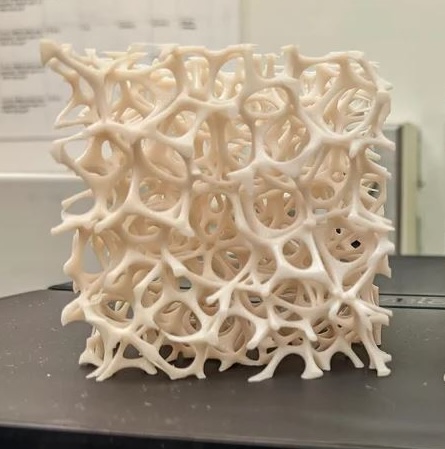
- Gradient Lattice Structures: These vary the density or geometry of the unit cells across the structure, providing a gradual transition in properties such as stiffness or strength. This is particularly useful in applications where different parts of a component experience varying loads or environmental conditions.

In line with these characteristics, we can try to extrapolate the applications that can best take advantage of them:
- Lightweight Structural Components: One of the primary applications of lattice structures in aerospace is the development of lightweight structural components. Aircraft require materials and structures that provide high strength and stiffness while minimizing weight to improve fuel efficiency and performance. Lattice structures can replace solid materials in critical, and non-critical, areas of components such as wings, fuselage sections, and interior panels, resulting in significant weight reductions.
- Crash and Impact Energy Absorption: Lattice designs can be optimized for energy absorption, making them ideal for crash protection and impact resistance. The ability of lattice structures to deform in a controlled manner upon impact helps dissipate energy and reduce the force transmitted to critical areas of the aircraft. This is particularly valuable in designing aircraft components like landing gear, seats, and crumple zones that must protect passengers and equipment during accidents.
- Thermal Management and Heat Dissipation: The open, porous nature of lattice structures allows for effective thermal management by facilitating airflow and heat dissipation. In aerospace applications, where components are exposed to extreme temperatures and thermal cycling, lattice structures can be used in heat exchangers, cooling channels, and other components that require efficient thermal regulation.
- Vibration Damping and Noise Reduction: The specific design of lattice structures can also be tailored to dampen vibrations and reduce noise, enhancing the comfort and safety of passengers. This is particularly important in aircraft interiors, where lattice structures can be used in floor panels, bulkheads, and seating arrangements to reduce noise and vibrations.
- Fuel and Fluid Filtration: Due to their porous nature, lattice structures can be used for filtration applications, such as fuel filters and fluid filtration systems. The ability to control the pore size and distribution within the lattice allows for precise filtration, removing contaminants and ensuring the safe operation of aircraft systems.
Benefits of Lattice Design in Aerospace:
- Weight Reduction: Lattice structures provide a significant advantage in weight reduction compared to traditional solid materials, leading to improved fuel efficiency and payload capacity.
- Tailored Mechanical Properties: Lattice structures can be designed to have specific mechanical properties, such as stiffness, strength, and energy absorption, allowing for customized solutions for different aerospace applications.
- Material Efficiency: By using material only where necessary, lattice structures maximize material efficiency, reducing waste and lowering manufacturing costs.
- Improved Performance: The ability to optimize lattice designs for specific applications can result in enhanced overall performance, including better load distribution, impact resistance, and thermal management.
Despite the numerous advantages of lattice designs, there are several challenges associated with their use in aerospace:
- Manufacturing Complexity: Producing lattice structures, particularly at the micro-scale, requires advanced manufacturing techniques such as additive manufacturing (3D printing). These processes can be time-consuming and costly, especially for large-scale production.
- Design and Simulation: Designing lattice structures requires sophisticated computational tools to simulate and optimize their behavior under various loads and conditions. Accurate modeling of lattice behavior, especially under dynamic or high-stress conditions, remains a challenge.
- Quality Control and Inspection: Ensuring the integrity and consistency of lattice structures is crucial for aerospace applications. Non-destructive testing and inspection methods must be developed and refined to verify the quality of lattice components without damaging them.
The future of lattice design in aerospace looks promising as advancements in additive manufacturing as computational modeling continue to evolve. Research efforts are focused on developing more efficient manufacturing processes, improving design tools, and exploring new lattice geometries that can provide even greater performance benefits. As these challenges are addressed, lattice designs are expected to play a more significant role in the development of next-generation aerospace components, contributing to lighter, stronger, and more efficient aircraft.
As the technology continues to mature, it holds the potential to revolutionize aerospace engineering, enabling the development of safer, more efficient, and more innovative aircraft.
Nowadays we can already find several examples of the application of lattices, both macro and micro in current programs.
Macro-Scale Lattice Structures
- Airbus A320 Neo Engine Mounts: Airbus has explored the use of macro-scale lattice structures in the design of engine mounts for their A320 Neo aircraft. By using lattice designs, Airbus was able to create an engine mount that is significantly lighter than traditional designs while maintaining the necessary strength and stiffness. The lattice structure’s lightweight nature contributes to overall fuel savings and improved performance.
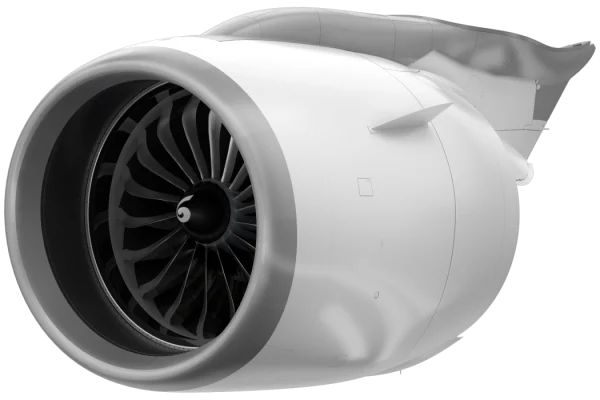
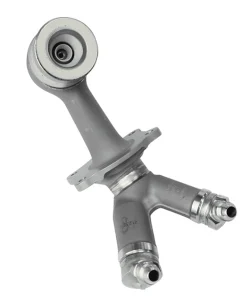
- GE’s LEAP Engine Fuel Nozzles: General Electric (GE) has integrated macro-scale lattice structures into the fuel nozzles of its LEAP engine. These fuel nozzles are additively manufactured using metal 3D printing technology and feature a complex lattice structure that optimizes the flow of fuel and air. The lattice design not only reduces the weight of the nozzle but also improves fuel efficiency and reduces emissions. This example highlights the use of lattice structures for optimizing fluid dynamics and thermal management within a critical engine component.
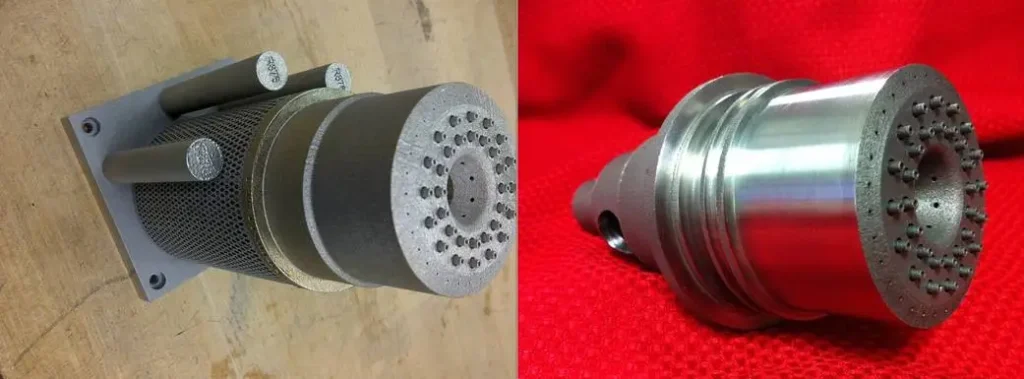
- NASA’s Additively Manufactured Rocket Injector: NASA has successfully tested a rocket injector made using additive manufacturing techniques that incorporate macro-scale lattice structures. The injector’s lattice design allows for efficient mixing of fuel and oxidizer, enhancing combustion efficiency and reducing the overall weight of the rocket component. This project demonstrates how lattice structures can be used in propulsion systems to optimize performance and reduce weight.
Micro-Scale Lattice Structures
- Boeing’s Lightweight Cabin Components: Boeing has explored the use of micro-scale lattice structures for lightweight cabin components. By incorporating micro-lattice designs into interior panels and fittings, Boeing has been able to reduce the weight of the aircraft’s interior without compromising strength or durability. These micro-lattices provide sufficient rigidity while significantly lowering the overall mass, contributing to improved fuel efficiency and payload capacity.
- Aerospace Grade Lattice Structures in Heat Exchangers: Micro-scale lattice structures are increasingly being used in the design of heat exchangers for aerospace applications. By optimizing the internal lattice geometry, engineers can create heat exchangers that offer superior thermal management capabilities while minimizing weight. The enhanced surface area of micro-lattice designs improves heat transfer efficiency, making them ideal for cooling critical components in high-performance aircraft and spacecraft.
- Advanced Vibration Damping with Micro-Lattice Designs: Micro-lattice structures are being investigated for their potential in vibration damping applications within aircraft. These lattices can be tailored to exhibit specific damping characteristics, reducing vibrations and noise throughout the cabin. This is particularly useful for improving passenger comfort and reducing structural fatigue in the aircraft. The lightweight nature of micro-lattices ensures that these benefits are achieved without adding significant weight to the aircraft.
As a summary, by optimizing the distribution of material, lattice structures provide high strength and stiffness, enhancing the durability and safety of aerospace components. At the same time, the specific properties can improve heat dissipation and thermal management, making them ideal for components exposed to extreme temperatures.
In is important to highline the customizable properties of this type of structures because can be tailored for specific applications, allowing for precise control over mechanical properties, vibration damping, and energy absorption. This open the door to multiple applications that for sure, will be continuously developed in the near future.
Despite the advantages, there are challenges in manufacturing and integrating lattice structures into aerospace components. Advanced additive manufacturing techniques, such as laser powder bed fusion and electron beam melting, are required to produce these complex geometries. Additionally, ensuring consistency and reliability in the production of lattice components is crucial for aerospace applications.
Next research will likely be focused on improving manufacturing processes, developing new lattice geometries, and integrating lattice structures with traditional materials. As these challenges are addressed, the use of lattice structures in aerospace applications is expected to expand, contributing to the development of lighter, more efficient, and more innovative aircraft and spacecraft designs.
Once we have visited the concepts of lattice design and meta materials, it is time to go to the next step and try to understand the smart materials.
<to be continued>