In 2023, the aerospace and defense (A&D) industry witnessed a revitalization of product demand after several years of low activity. Air transport very quickly surpassed pre-pandemic levels, which, has been evidenced by a significant increase in orders for new aircraft. For defense original equipment manufacturers (OEMs), increased geopolitical volatility that has led to a sharp increase in military spending, as well as the increasing prioritization of military modernization, through digitization, are significantly driving the sector.
According to some analysts, such as Edgewater Research, the A&D market has been registering an increase in demand throughout 2024, as airlift has sought to continue the growth trajectory we had been seeing through 2019. However, increased geopolitical instability, coupled with the problems in the financial markets, has produced an opposite effect in the sense of a detraction from that growth.
A Deloitte article on the state of the A&D industry during 2024 noted an upturn in certain emerging markets (such as advanced air mobility) that as they move through the testing and certification processes would generate additional demand for products and services to be commercialized.
During 2024, the A&D industry has been adopting innovative technologies to improve its products and processes to try to adapt to the geopolitical landscape and be prepared for the growth in demand. Dozens of new technological advances have already changed the landscape, with four specific areas of greatest interest among A&D companies.
Artificial Intelligence
Artificial intelligence (AI) has quickly become the dominant disruptive technology within the technology industry. Favored by companies in all markets, from consumer electronics to healthcare original equipment manufacturers (OEMs) to contract manufacturers (CMs) and electronic manufacturing service (EMS) providers, AI controlled the majority of chip market demand in 2024. Market studies indicate that 2025 will be another year in which AI will reign supreme, albeit after a major effort to optimize processor usage following the impact produced by China DeepSeek.
Over the past decade, the use of AI in military applications has increased. One of the main benefits of AI is its most basic capability, which is to automate manual processes, reducing wasted time and human error. The latter, in addition to representing a risk for people, produce an operational delay that detracts from the system’s capacity, in an operating environment where the speed of reaction is the difference between life and death.
New advances in AI are closely tied to machine learning (ML), computer vision and other subsets of AI can provide users with greater depth in the data collected to reveal patterns and insights that were previously overlooked. AI often helps optimize processes through asset utilization and efficiency, identifying opportunities to streamline tasks and reduce waste. Typically, these complex tasks can be completed in vastly shorter timeframes compared to human teams.
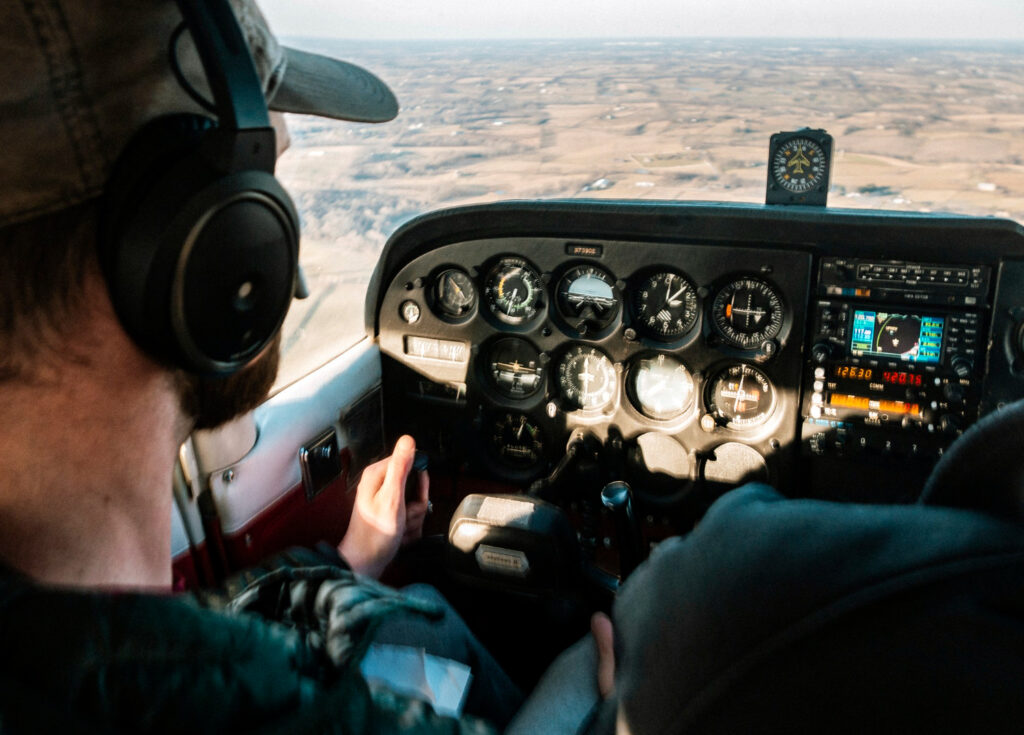
Similarly, the data collected can help organizations make critical decisions quickly with the help of a more complete view thanks to the insights gathered. For example, in aerospace applications, AI can help human pilots improve flight safety through advice. Although the human pilot is ultimately the decision maker, flight AI can reduce human errors made during flights and improve operational efficiency through flight path recommendations. This would also optimize resource utilization, reducing costs and fuel usage.
In addition, A&D AI technology provides a plethora of benefits beyond combat use. Thanks to the application of generative AI, new studies have led to improved information processing in various military domains, primarily in the very critical process of target identification, prioritization and management.
U.S. Air Force Colonel Matthew Strohmeyer recently spoke to Bloomberg about the success of his data-driven exercise using a large language model (LLM) to perform a request for information. The test was a success, and his rapid processing of the information completed the request in a matter of minutes, when it normally takes several hours or days for personnel to complete.
This processing speed would be a huge advantage for urgent requests, such as evacuation and casualty care plans, where strategic decisions in high-stress situations would avoid excessive casualties. Full implementation of generative AI and other LLMs is still in the increasingly near future. Continued testing by officers like Strohmeyer is illuminating new ways in which AI can benefit all military sectors.

Sustainable technologies
Although there are increasing calls for a more sensible and less ideological approach to the environmental problem, concerns about climate change and the impact of multi-billion dollar weather events will continue to exist. Clearly, political considerations aside, greater efficiency in energy consumption in a world where energy is increasingly necessary has led many organizations to focus on seeking more sustainable processes and technologies. The reality is that all industries, including chip manufacturers themselves, are striving to reduce their environmental impact and carbon footprint.
Since the signing of the Paris Agreement, A&D companies and others have set aggressive targets to reduce greenhouse gas emissions, water waste and energy to meet their interim 2030 sustainability goals. This helps drive more alternative energy sources, such as electric flight technology, to curb emissions. In particular, aerospace companies are looking for more energy-efficient integrations and designs to reduce emissions and fuel costs.
One company, Metafuels, is developing alternative fuels for aerospace operations. Its patented technology, aerobrew, converts green methanol into sustainable aviation fuel (SAF). According to Metafuels, this technology reduces the carbon footprint of fuel used in air travel by 80%.
RTX, a multinational aerospace and defense conglomerate, is committed to achieving net zero emissions by 2050. RTX is developing new aircraft components and equipment designs to minimize weight and maximize energy efficiency. These innovations are expected to reduce fuel consumption by 3% per flight by 2035. By 2050, RTX expects to improve fuel consumption by 8% per flight.
Overall, aerospace sustainability through alternative fuels or other methods, such as electric, hybrid, hydrogen and solar propulsion technologies, are driving most of the sustainability momentum. According to some articles published by Deloitte, a major U.S. defense contractor has “strategically invested in an electric propulsion solutions provider to drive the development of electric aviation solutions.” The A&D industry should anticipate new opportunities to apply these technologies in the defense sector, as well as in maritime and aviation applications.”
In particular, the increasing electrification of military vehicles is contributing to a further boost in the sustainability of military applications. The market value of military vehicle electrification is forecast to increase from $4.1 billion in 2023 to $20.4 billion in 2030.
This is an impressive compound annual growth rate (CAGR) of 25.6% over seven years. Similarly, like AI, investment in sustainable technologies applications has only just begun.
Over the next decade, new solutions to further reduce the A&D industry’s carbon footprint are likely to increase.
Advanced satellite technology
The space race has been experiencing a major boom in recent months. Industrial interest in space activity and applications has increased, as the “gap” left by NASA following the cancellation of the Space Shuttle Program in 2011 has opened up an opportunity to make huge profits in the sector by optimizing and reducing launch costs. Notable company founders such as Tesla’s Elon Musk, Amazon’s Jeff Bezos and Virgin Group’s Richard Branson have invested heavily in space travel technologies. While the news focuses primarily on the development of these organizations’ spacecraft, more notable advances are occurring in satellite technology.
Satellite launches are the primary technology behind most commercial space activities. According to a recent report by Allied Market Research, “the global satellite industry size generated $286 billion in 2022 and is projected to generate $615.7 billion by 2032, at a CAGR of 8.1% from 2023 to 2032.”
The main growth driver in the sector is due to the low cost of putting satellites into orbit and the growing need for geospatial intelligence and satellite imagery. In satellite technology, miniaturization is becoming a rising star. Miniaturization makes it possible to create easily launchable and scalable picosatellites and nanosatellites. The push for miniaturization in the satellite industry is contributing to the overall decrease in launch costs.
Similarly, the need for global connectivity through the Internet of Things (IoT) is contributing to the demand for expanding satellite communication systems. The Starlink satellite internet constellation, operated by SpaceX, Tesla founder Elon Musk’s space company, has been one of the most prominent players in this market. In recent years, Starlink has been able to bring the Internet to previously unconnected areas thanks to its satellite network.
British and South African start-ups Citadel Space Systems and Dragonfly Aerospace, respectively, are developing new methods to reduce the cost of launching satellites and new platforms. Citadel Space Systems specifically manufactures pico and nanosatellite platforms for commercial and scientific applications. The company’s smallest platform, Squire, is equipped with an onboard computer for fast calculations on deep space missions.
Its other platforms assist specific missions for research, discovery and education applications. This data can be used to develop new pico and nanosatellite technologies that further improve the reach of Internet connectivity.
To be continued…