

The second goal, increase efficiency
Space exploration and commercial aviation have boosted each other since their inception. During the early years of space exploration, existing technologies were used in aeronautics, as they shared many of the same needs. As space exploration developed with new challenges and therefore new investments, the initial contribution was somehow “returned” to aeronautics. In this sense, today’s aeronautical technology owes much to the research carried out for space research.
Space missions require materials that are lightweight yet strong enough to withstand the extreme conditions of space travel. Composite materials, such as carbon fiber reinforced polymers (CFRP), have been extensively used in spacecraft construction. For example, CFRP is being heavily used in the construction of the Airbus A350 XWB, the Boeing 787 Dreamliner, resulting in a significant reduction in weight compared to traditional aluminum alloys while maintaining structural integrity and durability.
Space exploration has played a crucial role in the development of new materials with enhanced mechanical performance and reduced weight. Here’s a summary with concrete examples:
Composite Materials:
For example, G10, an epoxy-glass composite, is resistant to chemicals, UV light, and heat below 140°C, making it useful for aircraft panels and wiring. Aramid is a class of synthetic polymers that can reduce accidental damage to engine pylons. Carbon fiber composites are up to 60 times stronger than steel and make up much of an aircraft’s fuselage, wings, and tail.
We have already reviewed this type of material in the previous chapter, appreciating its lightness and exceptional properties. However, we should consider here an additional aspect. Since, as we have seen, the material and the component are created simultaneously during the manufacturing process, this manufacturing technology allows us to design a much more efficient components by adapting the material to the specific component requirements. This means that we can design the material for the specific use we intend to cover, so for example, we could insert stronger unidirectional fibers in the areas of highest load, add layers of Kevlar to increase the resilience of an area or cover the areas exposed to the high temperature with ceramic fibers.
This adaptation capability of the composite’s components opens a new level of efficiency in the aerospace structures.
Thermal Protection Systems:
Re-entry into Earth’s atmosphere subjects spacecraft to intense heat, requiring advanced thermal protection systems (TPS) to prevent overheating and structural damage.
As an example, silicon carbide-based materials, developed for use in the heat shields of spacecraft like the Space Shuttle, offer exceptional thermal resistance and lightweight properties. These materials have also found applications in high-temperature environments on Earth, such as in aerospace propulsion systems and industrial furnaces.
High-temperature areas of aircraft, such as cowlings and firewalls, require materials capable of withstanding extreme heat and thermal stress. Heat-resistant materials play a critical role in ensuring the safety, reliability, and performance of aircraft operating in high-temperature environments. Silicon carbide-based materials are among the heat-resistant materials commonly used in such applications. This analysis explores the properties, applications, and advantages of silicon carbide-based materials and other heat-resistant options for aerospace use.
Silicon Carbide (SiC)-Based Materials:
Silicon carbide is a ceramic material known for its exceptional thermal stability, high melting point, and excellent mechanical properties at elevated temperatures. It exhibits low thermal expansion, high thermal conductivity, and resistance to thermal shock and oxidation, making it suitable for high-temperature applications.
SiC-based materials are used in aerospace components subjected to extreme heat, including jet engine components, exhaust systems, and thermal protection structures. They provide reliable performance in environments with temperatures exceeding 1000°C, ensuring the integrity and longevity of critical aircraft systems.
The main advantages of SiC-based materials include their high temperature resistance, thermal conductivity, and mechanical strength. They offer lightweight solutions for reducing overall aircraft weight while maintaining structural integrity and thermal performance.
Refractory Metals:
Refractory metals, such as tungsten, molybdenum, and niobium, possess high melting points and excellent thermal stability, making them suitable for use in extreme heat environments. They exhibit good mechanical properties at elevated temperatures and resist oxidation and thermal creep.
Refractory metals are used in aerospace applications requiring heat-resistant materials, such as engine components, rocket nozzles, and thermal barriers. They provide thermal protection and structural support in high-temperature environments encountered during flight.
Refractory metals offer superior heat resistance and mechanical properties compared to traditional materials like steel and aluminum. They contribute to the durability and reliability of aircraft systems operating in high-temperature conditions.
Ceramic Matrix Composites (CMCs):
Ceramic matrix composites are composed of ceramic fibers embedded in a ceramic matrix, such as silicon carbide (SiC) or alumina (Al2O3). They exhibit exceptional thermal stability, high temperature resistance, and mechanical strength.
CMCs are used in aerospace components exposed to extreme heat, such as engine components, heat shields, and thermal protection systems. They provide lightweight, durable solutions for withstanding high temperatures and thermal gradients.
The main advantages of CMCs include their high temperature resistance, lightweight nature, and thermal shock resistance. They offer improved performance and efficiency compared to traditional metallic materials in high-temperature aerospace applications.
Additive Manufacturing (3D Printing):
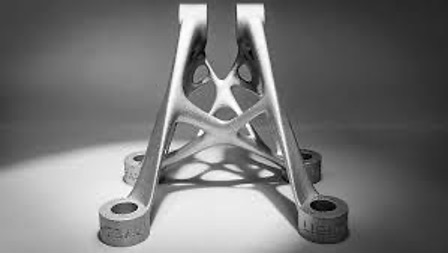
As we discussed in the chapter on composite materials, the freedom of being able to design a component with the fewest constructive constraints greatly contributes to increased design efficiency. If we are able to place material exactly where it is needed and remove it from where it does not contribute, we will be able to design more efficient components. This is precisely what additive manufacturing, or as 3D printing is commonly known, facilitates. Having fewer limitations in terms of manufacturing the element, for the first time it is possible to make designs that were previously impossible to fabricate. So-called “organic” structures, or operable mechanisms that embody inaccessible voids or recesses, are a good example of this.
Additive manufacturing is used for prototyping, customization, and low-volume production of aerospace components, including complex geometries and integrated assemblies.
Various materials are used in additive manufacturing, including metals (e.g., titanium alloys, aluminum alloys), polymers (e.g., ULTEM, PEKK), and composites (e.g., carbon fiber-reinforced polymers).
On the other hand, additive manufacturing offers not only design freedom, but reducing the material waste, very important aspect considering the high price of some of the materials, enabling the production of lightweight, intricately detailed parts with improved performance characteristics.
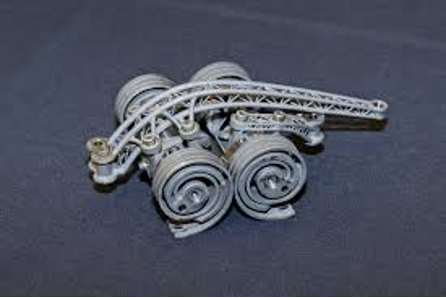
Current challenges include the limited material selection, the surface finish quality, and mainly the certification requirements for aerospace-grade components. Research focuses on optimizing process parameters, material properties, and post-processing techniques.
Meta-Materials and Nano-Engineering:
Meta-materials and nano-engineering represent cutting-edge technologies that revolutionize material science and engineering. They involve the design and manipulation of materials at the nanoscale to achieve unprecedented properties and functionalities. In the context of the new generation of commercial aircraft, these advancements offer numerous benefits in terms of performance, efficiency, and sustainability.
Meta-Materials:
Meta-materials are artificially engineered materials with unique electromagnetic properties not found in naturally occurring materials. They are designed at the nanoscale to exhibit exotic behaviors, such as negative refractive index, electromagnetic cloaking, and enhanced light manipulation.
Those materials offer unprecedented control over electromagnetic waves, enabling applications in antenna design, sensing technology, and electromagnetic shielding. In aircraft design, meta-materials can be utilized to improve communication systems, radar stealth, and electromagnetic interference mitigation.
Ongoing research are focused on expanding the capabilities of meta-materials for aerospace applications, including broadband invisibility cloaks, tunable electromagnetic filters, and adaptive antennas. Advances in fabrication techniques, such as additive manufacturing and nano-imprint lithography, drive the development of novel meta-material structures with tailored electromagnetic responses.
The challenges to wider the use of those elements came mainly from the scalability, reproducibility, and cost-effectiveness aspects. Current research focuses on scaling up production methods, controlling material properties at the nanoscale, and integrating nano-engineered materials into practical aerospace applications.
Nano-Engineering:
This technology involves the manipulation and assembly of materials at the nanoscale to create structures with unique properties and functionalities. It encompasses various techniques, such as molecular self-assembly, nanolithography, and chemical vapor deposition, to control material properties at the atomic and molecular levels.
The nano-engineering enables the development of lightweight, high-strength materials with enhanced mechanical, thermal, and electrical properties. In aircraft applications, meanwhile offers benefits such as reduced weight, improved fuel efficiency, and increased structural durability.
Current research in nano-engineering focuses on developing advanced materials, such as nano-composites, nano-coatings, and nanostructured alloys, for aerospace applications. By tailoring material properties at the nanoscale, engineers aim to address specific challenges in aircraft design, including weight reduction, corrosion resistance, and thermal management.
Bio-Inspired Materials:
Since the dawn of time, humans have been learning from nature. In this sense, bio-inspired materials draw inspiration from natural biological systems to develop innovative materials with unique properties and functionalities. By mimicking biological structures and processes, bio-inspired materials offer numerous benefits in terms of performance, sustainability, and adaptability.
Bio-inspired materials are understood as synthetic materials that replicate or mimic structures, functions, and properties found in living organisms. They are designed to emulate biological systems, such as bones, muscles, and tissues, to achieve specific engineering objectives.
Those materials will offer advantages such as lightweight, self-healing, and adaptive properties, like those observed in natural organisms. In aerospace applications, bio-inspired materials can improve structural integrity, aerodynamic performance, and environmental sustainability.
Current research in bio-inspired materials focuses on understanding and replicating biological structures and processes, such as hierarchical organization, self-assembly, and hierarchical self-healing. By integrating biological principles into material design, engineers develop innovative solutions for aircraft components, including wings, fuselages, and propulsion systems.
The applications in the aerospace sector might be very significative. We may find hundreds of applications in various aerospace components, such as lightweight structural materials, adaptive wing surfaces, and drag-reducing coatings.
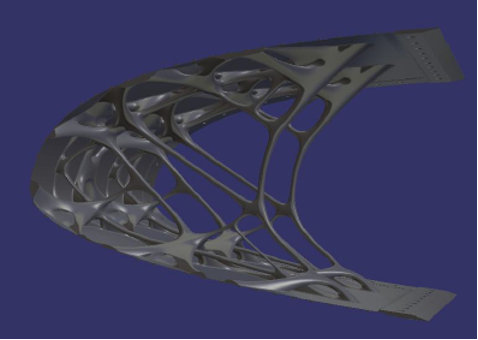
Ongoing research explores novel bio-inspired materials and manufacturing techniques, such as 3D printing, bio-fabrication, and biomimetic synthesis. By harnessing biological design principles, engineers aim to create advanced materials that improve aircraft performance, durability, and sustainability. Current challenges include replicating complex biological structures, controlling material properties, and integrating bio-inspired materials into existing aerospace manufacturing processes. Research focuses on understanding biological principles and developing scalable fabrication methods.
Meta-materials and nano-engineering, along with bio-inspired materials, represent groundbreaking advancements in material science and engineering. These technologies offer unique opportunities to enhance the performance, efficiency, and sustainability of the new generation of commercial aircraft. By leveraging the capabilities of meta-materials and nano-engineered materials, as well as drawing inspiration from natural biological systems, engineers can develop innovative solutions that push the boundaries of aerospace technology. Continued research and development in these fields are essential for driving further innovations and shaping the future of aviation.
<To be continued>