
Nuclear Propulsion in Aerospace: From Concept to Future Potential (Part 2 of 4)

Part 2 — Principles and Types of Nuclear Propulsion Systems 3. Principles of Nuclear Propulsion At its core, nuclear propulsion relies on one of the most energy-dense processes known to physics: nuclear fission. In this process, the nucleus of a heavy atom (typically uranium-235 or plutonium-239) splits into smaller fragments, releasing vast amounts of heat […]
Nuclear Propulsion in Aerospace: From Concept to Future Potential (Chapter 1 of 4)

Part 1 — Forewords 1. Introduction Since the dawn of flight, propulsion technology has evolved along a clear trajectory from piston-driven propellers to gas turbines, and eventually to rocket engines capable of reaching orbit. Each step has pushed the limits of speed, altitude, and endurance. Yet even today, aerospace engineers face a fundamental barrier: chemical […]
HYPERSONIC TECHNOLOGY IN AVIATION: UNLOCKING THE FUTURE OF HIGH-SPEED FLIGHT (PART 4)

Part 4: Future Outlook, Testing, Historical Context, Economics, Regulation, and Conclusion 1. Future Outlook The future of hypersonic aviation is shaped by technological maturity, policy decisions, and economic feasibility. Over the next two decades, we can expect a phased evolution: Short-term (2025–2030): Military dominance will continue, with operational deployment of hypersonic missiles and limited reusable […]
HYPERSONIC TECHNOLOGY IN AVIATION: UNLOCKING THE FUTURE OF HIGH-SPEED FLIGHT (PART 3)

Part 3: Aerodynamics and Materials 1. Aerodynamic Design Considerations The design of a hypersonic vehicle is fundamentally governed by the interplay between aerodynamic efficiency and thermal protection. At speeds exceeding Mach 5, traditional aerodynamic assumptions fail; new phenomena dominate, requiring innovative solutions to both lift generation and drag management. 1.1 External Configuration Hypersonic vehicles must […]
HYPERSONIC TECHNOLOGY IN AVIATION: UNLOCKING THE FUTURE OF HIGH-SPEED FLIGHT (PART 2)
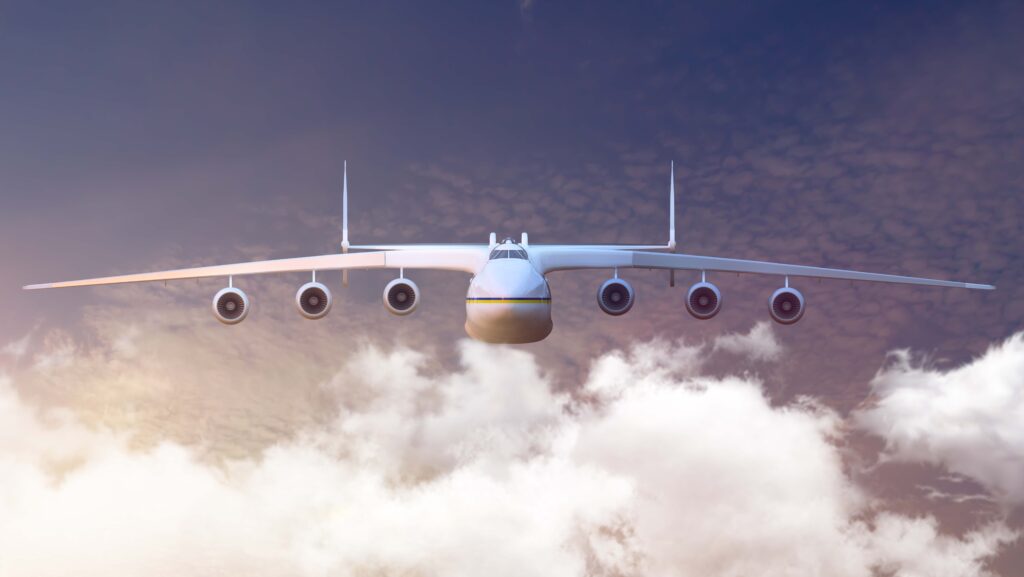
Part 2: Propulsion Systems for Hypersonic Aircraft If the physics of hypersonic flight define the unforgiving stage upon which aviation must perform, propulsion is the lead actor that determines whether such performance is even possible. The propulsion system of a hypersonic vehicle must do far more than simply push the craft forward: it must operate […]
HYPERSONIC TECHNOLOGY IN AVIATION: UNLOCKING THE FUTURE OF HIGH-SPEED FLIGHT

Introduction and The Physics of Hypersonic Flight The pursuit of hypersonic flight represents one of humanity’s boldest attempts to conquer the extremes of speed, temperature, and atmospheric physics. Ever since the first supersonic flights of the mid-20th century shattered preconceived limits of air travel, engineers and scientists have envisioned a future where aircraft could travel […]
REVIEW OF INNOVATIVE TECHNOLOGIES IN THE DEFENSE SECTOR DURING 2024 AND PROJECTION FOR 2025

In 2023, the aerospace and defense (A&D) industry witnessed a revitalization of product demand after several years of low activity. Air transport very quickly surpassed pre-pandemic levels, which, has been evidenced by a significant increase in orders for new aircraft. For defense original equipment manufacturers (OEMs), increased geopolitical volatility that has led to a sharp […]
SMART STRUCTURES IN AEROSPACE DESIGN: BENEFITS AND CHALLENGES IV

Manufacturability Challenges Integration with Existing Aircraft Materials One of the main challenges in incorporating smart materials into aircraft is ensuring their compatibility with traditional aerospace materials, such as aluminum alloys and carbon fiber composites. For instance, while piezoelectric materials provide excellent sensing capabilities, they need to be seamlessly integrated into the structural design of the […]
SMART STRUCTURES IN THE AEROSPACE DESIGN: BENEFITS AND CHALLENGES

Smart material The so-called smart materials technology was born from an attempt to replicate nature by trying to obtain elements that in some way react to their environment in a predictable way. It is easy to understand that if we have materials capable of adapting to aerodynamic flows, as the wings of a bird do, […]
SMART STRUCTURES IN THE AEROSPACE DESIGN: BENEFITS AND CHALLENGES II

(part 2 of 4) Lattice Design In the previous section, we have mentioned lattice design, but we have not described what they are. It is now time to analyze in a little more depth what these types of materials consist of and what we can expect from them. Lattice design refers to the creation of […]