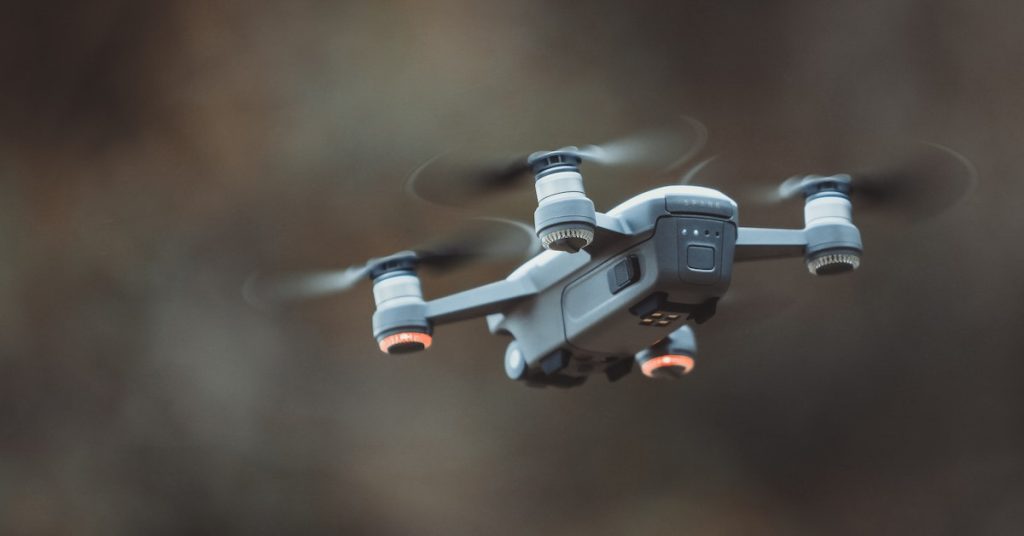
The current crisis in Ukraine highlights a new way of conducting warfare that offers several advantages to those who use drone: precision of attack, no human exposure, and economic efficiency.
The use of a light vehicle, which does not expose the lives of our soldiers, which can penetrate enemy defenses (we already see that they reach as far as Moscow) together with a relatively small war load, helps the ethics of the attack by reducing collateral casualties. These two elements make this model of attack highly “cost-effective” in the face of the media judgement to which any country taking military action is subjected.
To the above effect, we must add the high efficiency of a light drone strike. The cost of a Shahed 136 drone, which Russia is using to attack Kiev, is about $20,000, but to try to shoot it down, the missile that needs to be launched can cost between $150,000 and $500,000 (such as the NASAMS system recently sent to Ukraine).
Military drone sector
In today’s world, having a weapon that can be “politically acceptable” as well as “economically viable” represents a high value for geo-strategy (not forgetting its potential use by terrorist groups).
Based on these considerations, a new dimension in the development of military drones opens up, which we can call the “light suicide drone”.
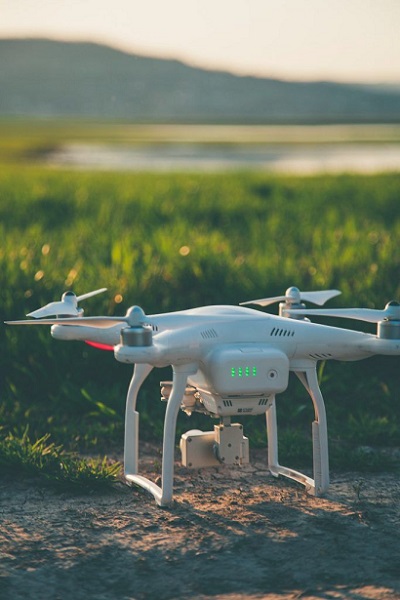
What technical characteristics are required for the development of such systems?
- Light weight of around 200 kg
- Payload capacity around 50 kg
- Range in the order of 1,000 km
- Passive guidance system to avoid interference
- Low manufacturing cost
Many industries are trying to enter the market drone, which is set to grow significantly. Without going any further, the first Spanish drone in this category, the Q-Slam 40 from the company Arquimea, was presented at the recent edition of the FEINDEF fair. This model is the lightest “featherweight” model in the category, weighing less than 25 kg (with launcher) and with a maximum range of around 12 km.
Drone sector: Technological capabilities
To enter fully into this category of weapons, with more capable platforms, we must secure a few elements that allow us to develop and exploit current technological capabilities (which are more than sufficient for this purpose):
- Financing: Although it is not a technology, this aspect is a basic pillar to consider in the development of a platform of this type. Although a light drone does not require excessively complex technology, which we undoubtedly have in our country, the development and testing process is not simple and requires significant investment. In order to obtain the necessary operational reliability, it would require a very robust design capable of ensuring that it is extremely unlikely (P<99.998%) that a malfunction would result in the loss of the drone, and worse, collateral damage when detonating off-target. A western country cannot afford the image cost it would suffer without one of these devices falling, for example, on a school. This design condition leads to an extensive test program comparable to that of a commercial platform, which would have a significant cost and therefore a considerable investment. This is perhaps the most important “barrier to entry” for this technology.
Materials technology in the drone sector
In order to achieve the required payload and range, we are compelled to think about advanced materials, mainly in composite material. Obviously the most obvious choice would be carbon fiber. In view of the military use of the platform, we should consider possible restrictions on raw materials arising from ITAR/EAR regulations. In any case, the use of first line materials would not be necessary as the structural requirements would not be very high. For the air platform, the most obvious selection would be, depending on the manufacturing technology, the following:
- Carbon Prepreg: Manual moldingCarbon Tape. ATL (Automated Tape Laying)Carbon Filament. AFP (Automatic Fiber Placement)
- System design and development: This is probably the aspect that requires further analysis.
- Air platform: While the design of the platform is conditioned by traditional aerodynamic criteria (no doubt), perhaps the biggest challenge is to meet the tactical requirements. That is, it is necessary to design the platform in such a way that it is easily stored, transportable and launchable from mobile platforms, or even (as in the case of the Q-Slam 40) through a launcher carried in a backpack. This type of operational constraints will highly condition the flight and control surfaces, making it necessary for them to be retractable or self-deployable.
- Propulsion: As with platform development, in addition to aerodynamic requirements, operational requirements, including fuel type, must be taken into account. The two models we have discussed use opposite solutions. In the case of the Shahed, we have an internal combustion engine, while the Q-Slam uses an electric motor. Logically, the system we apply can provide us with range (combustion engine) or ease of deployment and silent operation (electric motor).
Industrial Plan
When it comes to the aerial platform, our attention shifts to the engine and the guidance system (excluding software), both of which are readily available in the market. In this context, the most practical choice for the aerial platform is composite material, primarily due to its exceptional strength-to-weight ratio:
- Low volume. This is probably the best option for developing the initial version of the prototypes as we focus on manufacturing processes that require relatively little investment in industrial tooling. Technologies that could be feasible under this industrial approach would be:
- Manual Molding. In exchange for higher manufacturing costs, investment in tooling is limited. Out-of-autoclave curing. Since the sizing of components will be primarily for stiffness (and not strength) it would be desirable to use materials that do not require autoclaving for curing.
- CNC. The above processes prevent components from being finished to “net edge” so CNC annealing of components will be unavoidable.
- High volume Manufacturing. Nevertheless, for this type of platform, we should think about a production process that minimizes recurring manufacturing costs, even if it implies higher industrial investments:
- RTM/RTI: Although these processes are very efficient for high production rates, and significantly reduce the assembly and integration of components, the high cost of specific tooling imposes its own rules.
- ATL/FP. Although both technologies are very efficient for high production volumes and require more affordable tooling (although the machine cost is not), the relatively small size of the components limits the efficiency of the system. For small components, the proportion of time spent on head positioning increases in relation to the taping time. It is precisely in the speed of lay-up where the process efficiency of ATL/FP resides.

Summary
As a conclusion we can say that current events point to a market expansion in “kamikaze drones” that the existing aeronautics industry can take advantage of. The manufacturing processes are known, and the materials are readily available. However, we would need to secure access to the financing that would allow us to carry out product development, mainly from the operational and control aspects. On this last point, scalability and cybersecurity criteria will be key to entering the market with a robust product that can adapt to the changing conditions of current threats.